Héctor Lavoe
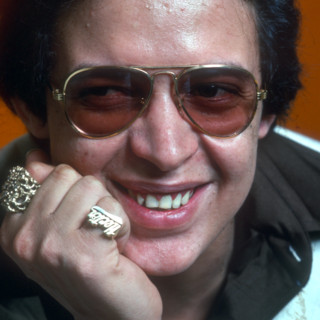
Héctor Juan Pérez Martínez (September 30, 1946 – June 29, 1993), better known as Héctor Lavoe, was a Puerto Rican salsa singer. Lavoe is considered to be possibly the best and most important singer and interpreter in the history of salsa music because he helped to establish the popularity of this musical genre in the decades of 1960s, 1970s and 1980s. His personality, style and the qualities of his voice led him to a successful artistic career in the whole field of Latin music and salsa during the 1970s and 1980s. The cleanness and brightness of his voice, coupled with impeccable diction and the ability to sing long and fast phrases with total naturalness, made him one of the favorite singers of the Latin public.
Lavoe was born and raised in the Machuelo Abajo barrio of Ponce, Puerto Rico. Early in his life, he attended Escuela Libre de Música de Ponce, known today as the Instituto de Música Juan Morel Campos and, inspired by Jesús Sánchez Erazo, developed an interest in music. He moved to New York City on May 3, 1963, at the age of sixteen. Shortly after his arrival, he worked as the singer in a sextet formed by Roberto García. During this period, he performed with several other groups, including Orquesta New York, Kako All-Stars, and Johnny Pacheco's band.
In 1967, Lavoe joined Willie Colón's band as its vocalist, recording several hit songs, including "El Malo" and "Canto a Borinquen." Lavoe moved on to become a soloist and formed his own band performing as lead vocalist. As a soloist, Lavoe recorded several hits including: "El cantante" composed by Rubén Blades, "Bandolera" composed by Colón, and "Periódico de ayer", composed by Tite Curet Alonso. During this period he was frequently featured as a guest singer with the Fania All Stars recording numerous tracks with the band.
In 1979, Lavoe became deeply depressed and sought the help of a high priest of the Santería faith to treat his drug addiction. After a short rehabilitation, he relapsed following the deaths of his father, son, and mother-in-law. These events, along with being diagnosed with HIV from intravenous drug use, drove Lavoe to attempt suicide by jumping off the 9th floor of a Condado hotel room balcony in San Juan, Puerto Rico on June 26, 1988. He survived the attempt and recorded an album before his health began failing. Lavoe died on June 29, 1993, from a complication of AIDS.
Anthology
- 2012-03-26T00:00:00.000000Z
Live
- 1997-10-21T00:00:00.000000Z
Strikes Back
- 1987-01-01T00:00:00.000000Z
Reventó
- 1985-12-31T00:00:00.000000Z
El Sabio
- 1980-10-31T00:00:00.000000Z
Feliz Navidad
- 1979-01-01T00:00:00.000000Z
Comedia
- 1978-01-01T00:00:00.000000Z
De Ti Depende
- 1976-01-01T00:00:00.000000Z
La Voz
- 1975-12-31T00:00:00.000000Z
Similar Artists